Case 05 · Product design & art direction · original VR IP
Wrong Room
an interface read under pressure — now running on the headset.
112
dev sessions logged
790
automated tests, green
90
fps on Quest 3 hardware
20,000
simulated matches per balance finalist
The short version
- An original VR game for Quest 3 — design, art direction and code all mine.
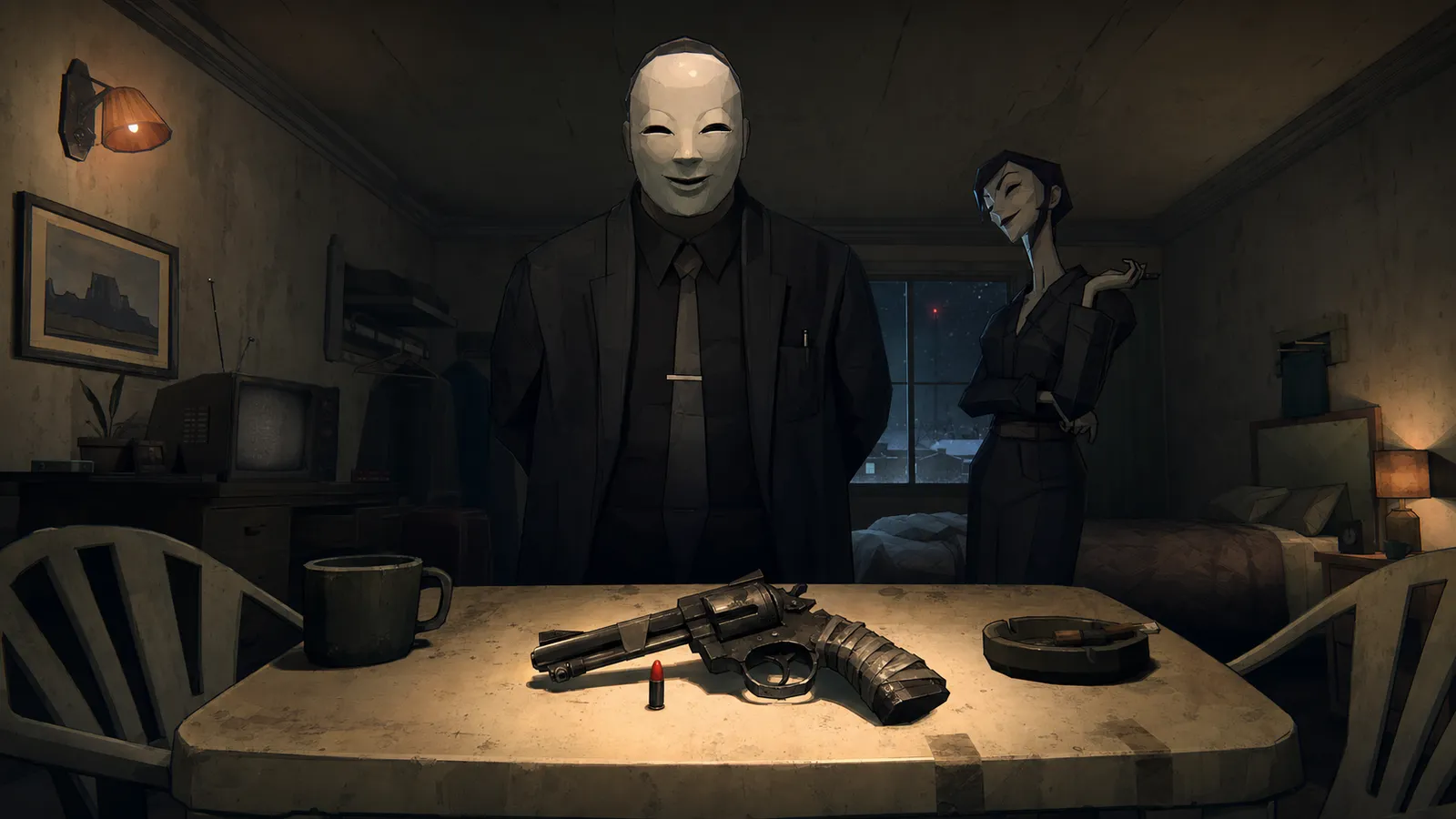
- You wake in a motel room with two debt collectors and a half-loaded revolver, and the room itself is the interface: no tutorial, no HUD.
- The hard problem was comfort. A motorised wheelchair became the only locomotion, which fixed the ergonomics and wrote backstory at once.
- It runs on hardware at 90 fps, under 790 automated tests, with 112 dated sessions behind it.
01 · The product
A 1v1 psychological-tension game read instantly, under stress, with no tutorial and no HUD.
The question the game asks slowly flips from “what did they do to me?” to “what did I do to them?”
- Premise
- Wake amnesiac in a motel room. Two collectors. One revolver.
- Loop
- Explore the room → duel at the table → a memory unlocks.
- Ending
- Ten memories. The tenth turns the TVs on.
Tension must stay usable
Fear is the product; confusion is a bug.
The room is the interface
Game state lives in the world — never in an overlay.
02 · Product decisions
The senior work was not adding features — it was deciding what the game protects, teaches and refuses. The best decisions weren’t in the original plan.
Decision 01 · Not in the original design
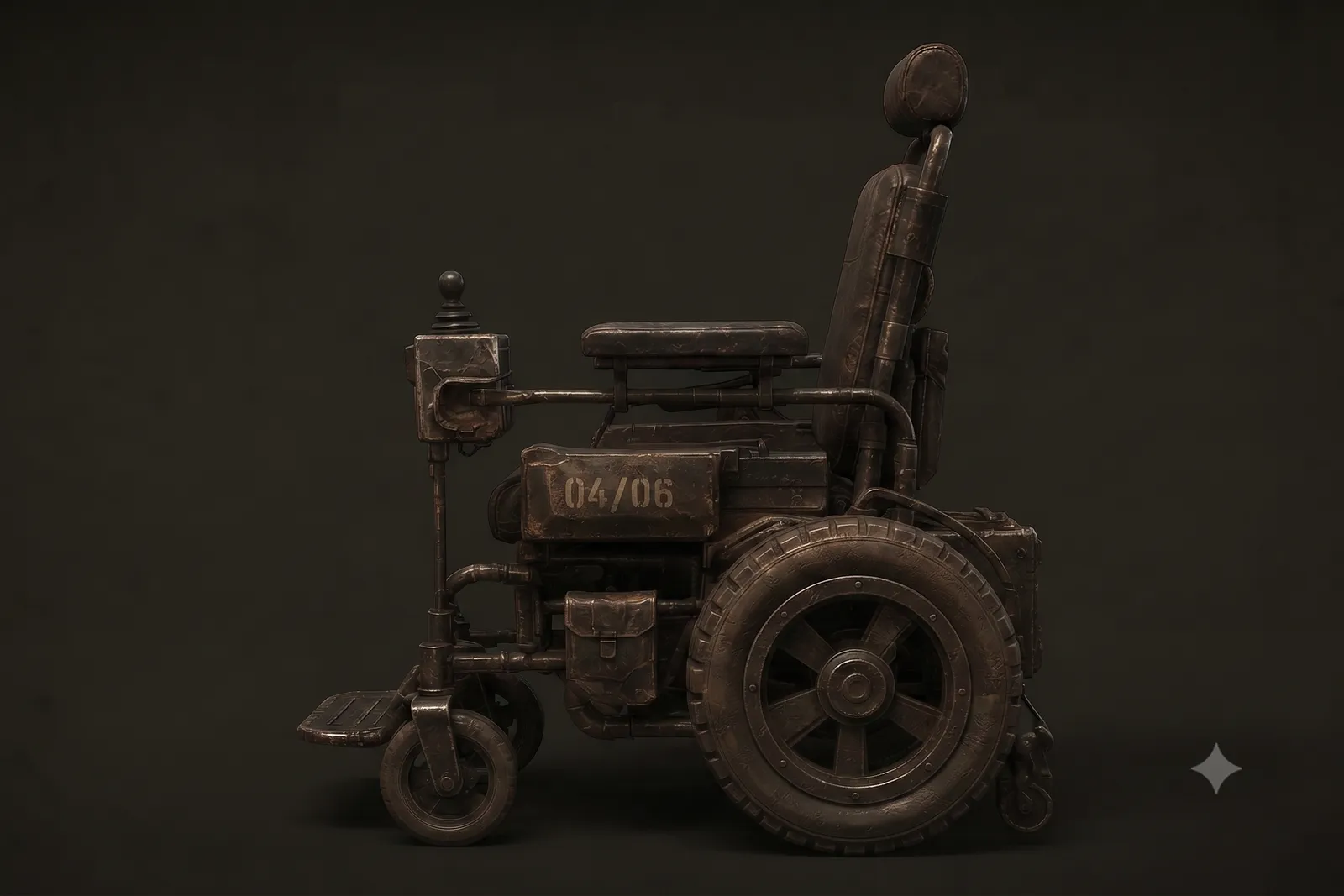
Locomotion became character
Standing to explore and seated to duel broke reach and comfort at every switch. A motorised wheelchair became the only locomotion — comfort, controls and backstory in one object.
Decision 02
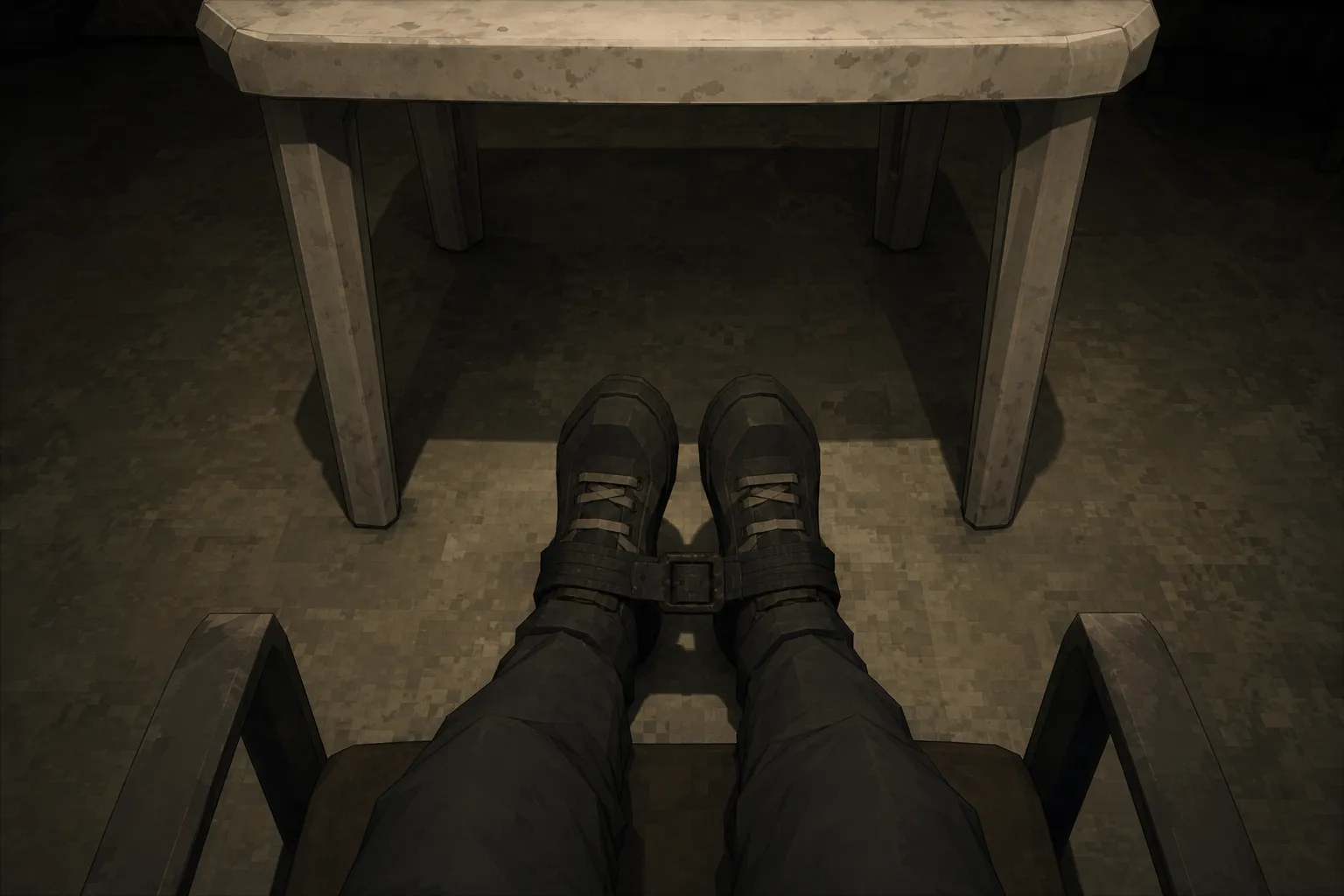
An honest comfort rating
Snap-turn ships as an option; the game keeps a ‘Moderate’ rating it can defend instead of gaming the label.
Cert review · decision 2026-07-16
Decision 03
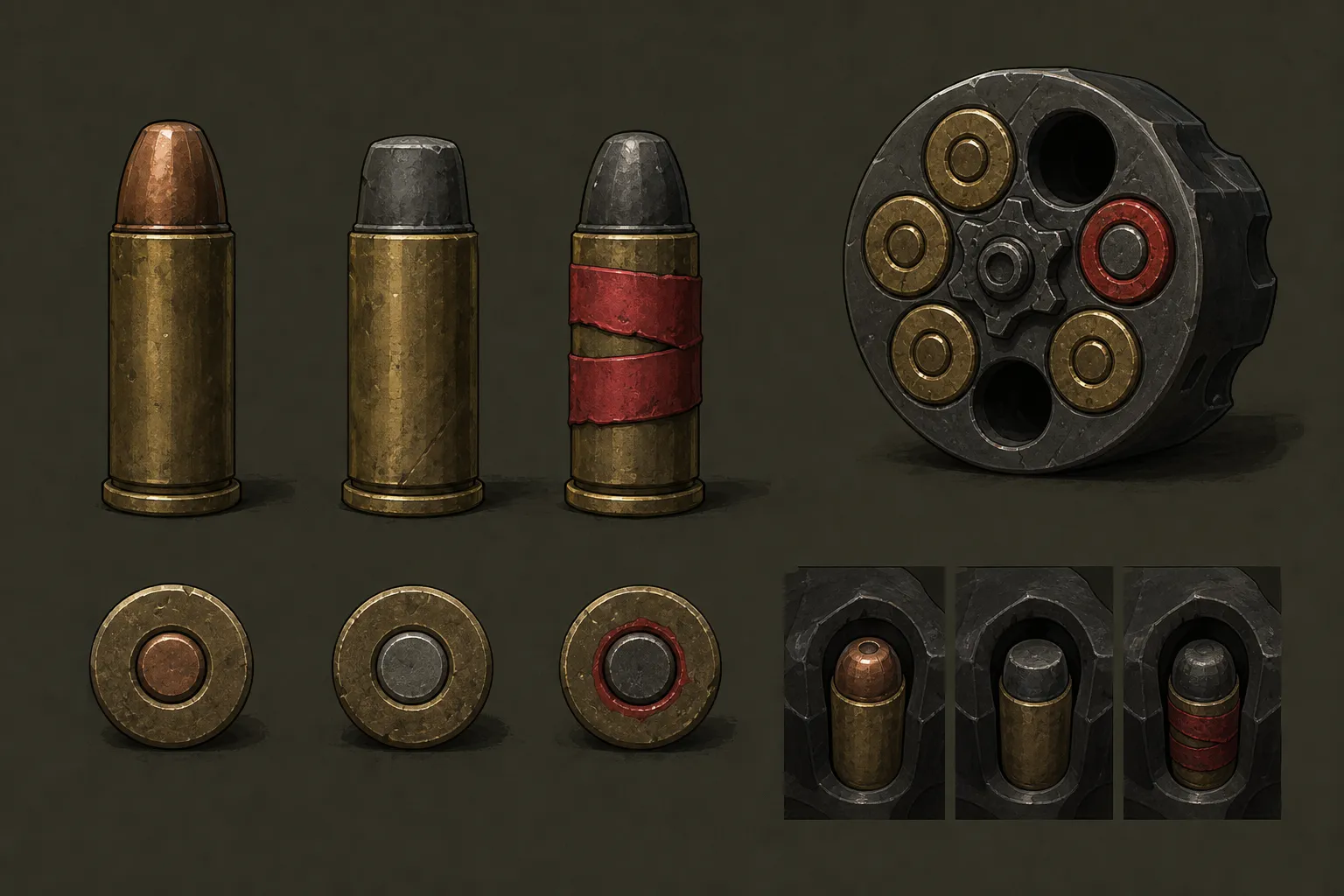
The core move nobody understood
Self-aim on a blank earns the extra turn — taught by watching Él do it first. The third cold tester finally explained the rule back.
Five fixes across code, feedback and staging
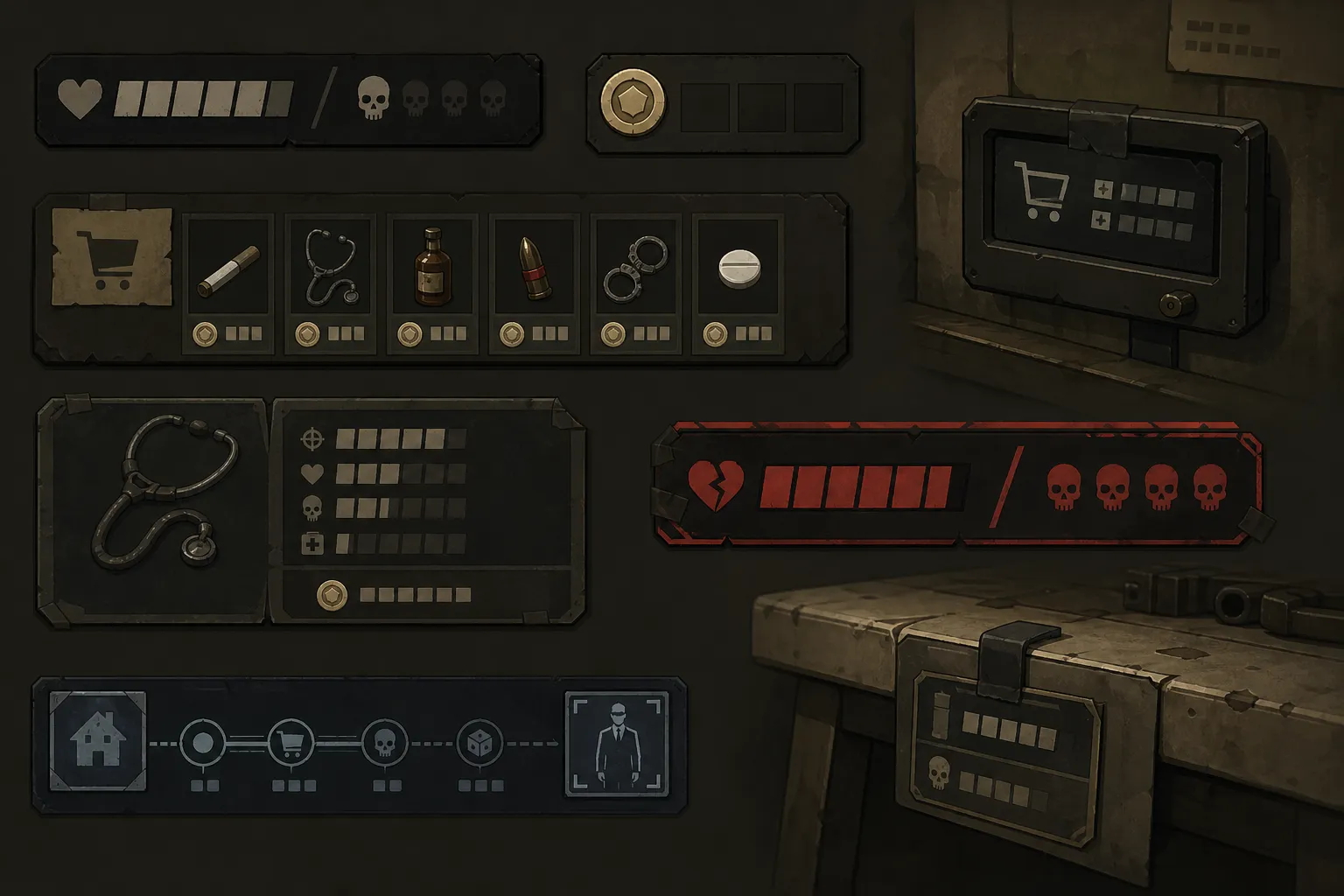
Decision 04
The story rewrote the economy
A lore decision killed the loot, so debt was resignified as score: same arithmetic reversed, zero balance code touched.
No test went red
03 · The visual system, documented
Grotesque-domestic art direction, inspired by Dorohedoro.
Palette · 6 core, dirty but legible
Pitch
#1A1C14
Base dark, never pure black
Soot
#2E2F22
Cel-shade shadow band
Mold
#4A5235
Walls, floor, room props
Decay
#7A8A52
Raking highlight on Mold
Bone
#C4AA6B
Light, UI accent, the coin
Ash
#E8E0CC
Text, toon outlines, never pure white
Tints · ≤ 10% of the frame · colour carries the story
Lamp
warm = yours
Cold
cold = from outside
Blood
red = damage only
Signal
the traffic light through the window
Never told, always learned.
Type · brutal display vs. cold mono
ÉL NO HABLA.
ELLA NO CALLA.
● 200 · turno: oponente · cargas: 2 reales · 4 fogueo
Bebas Neue · Share Tech Mono
The cast, as brand voices
Silhouette, palette role and staging carry the personality — same job as a brand voice: say who you are before you say a word.
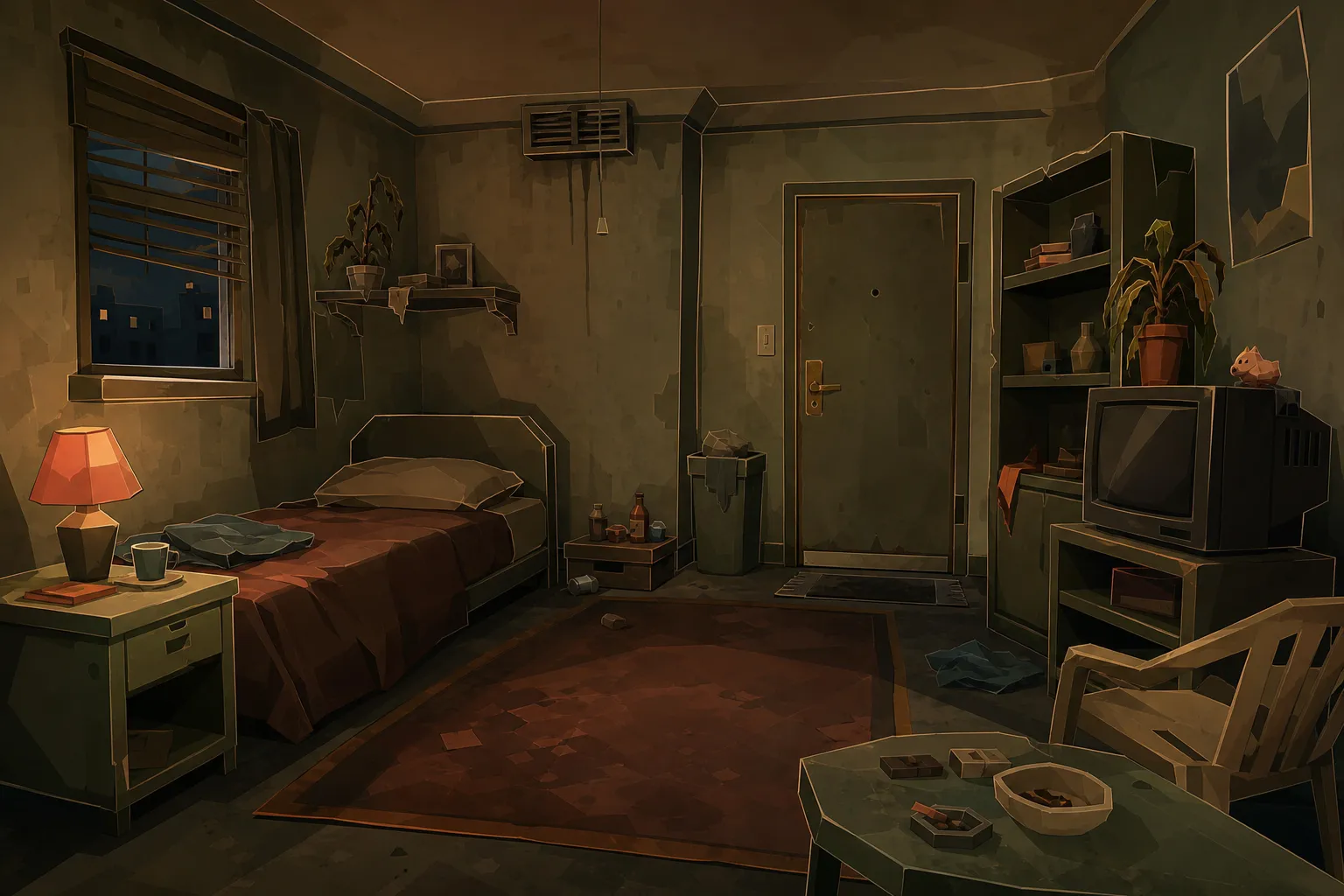
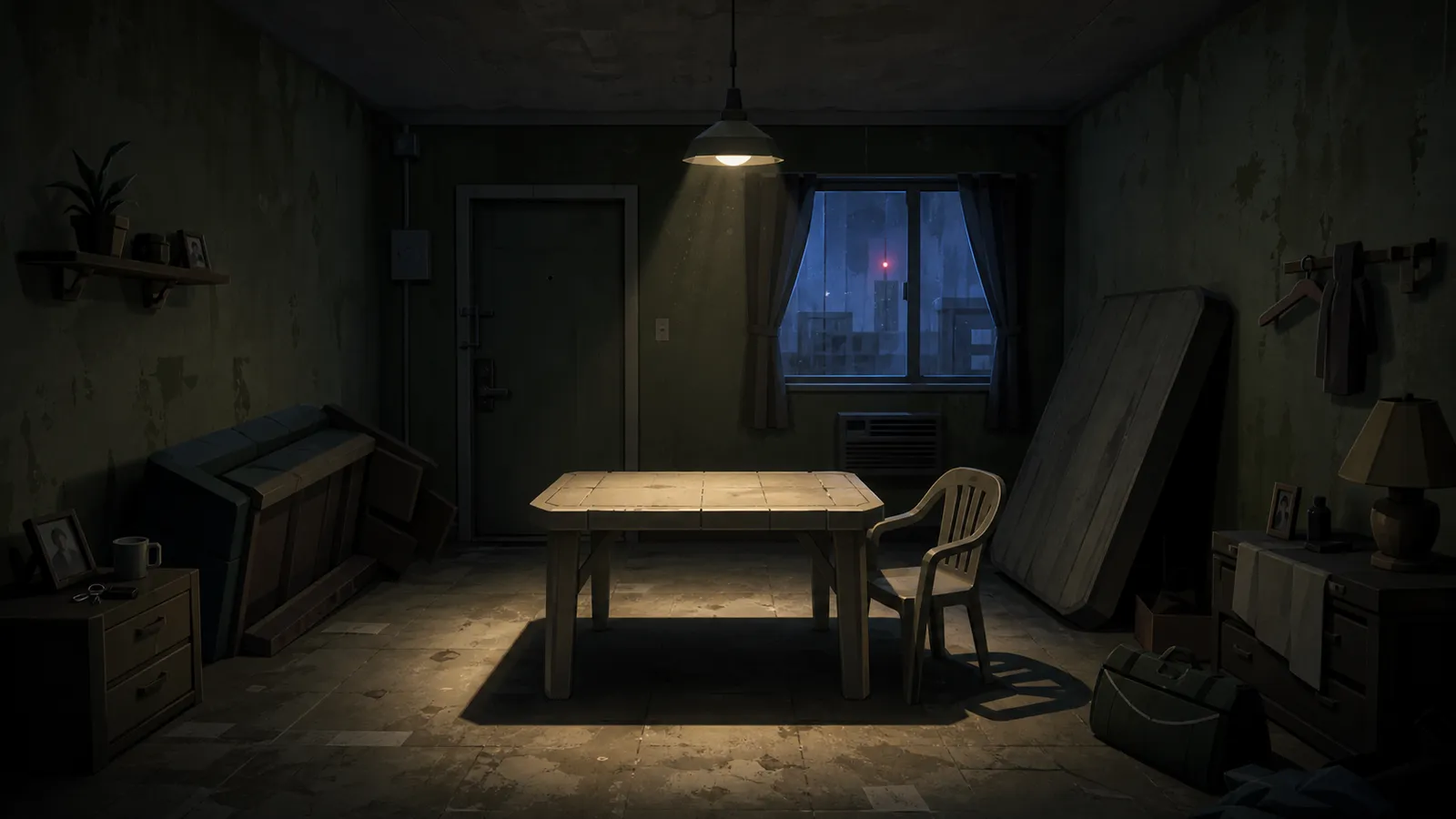
Light does the storytelling — and the interface has to read in both.
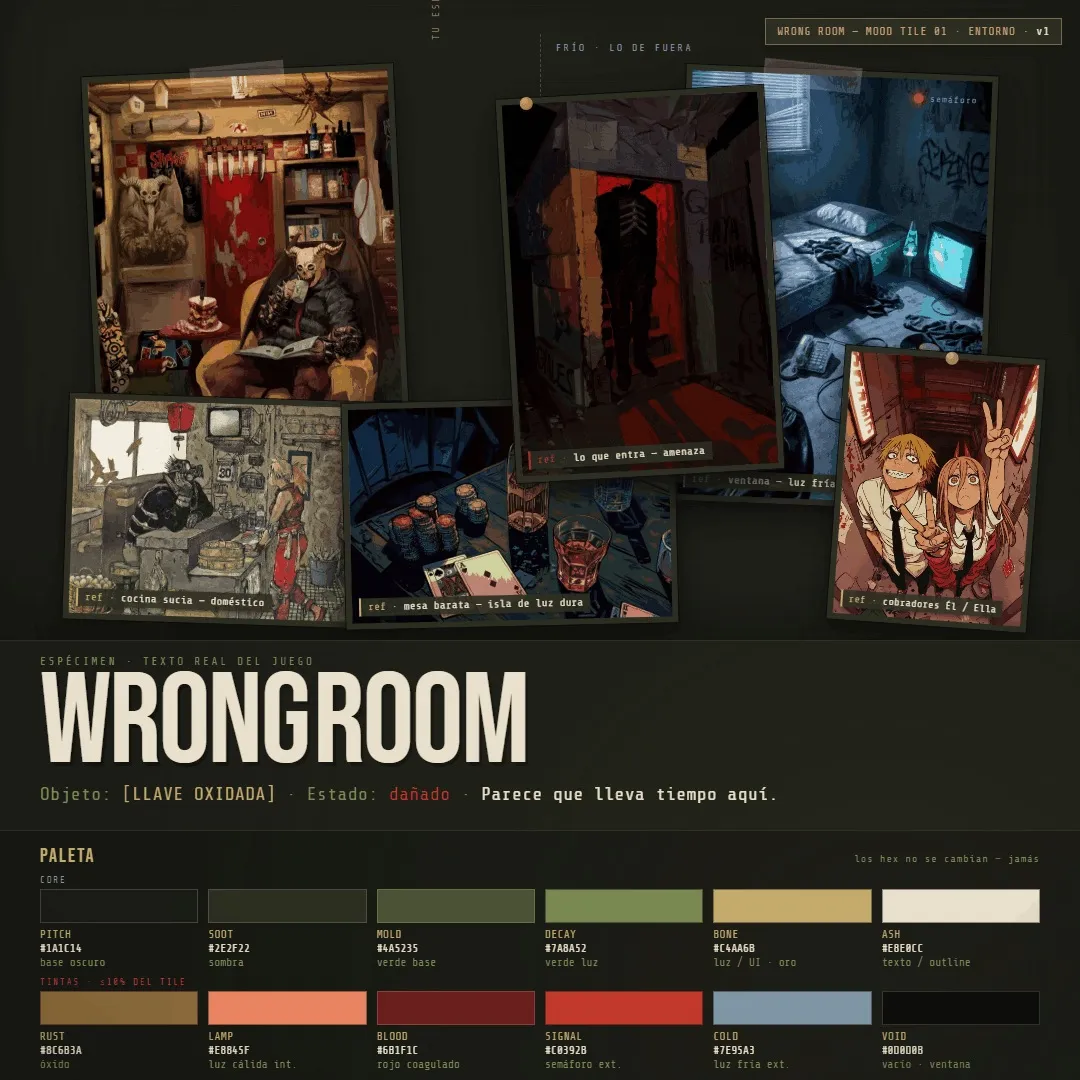
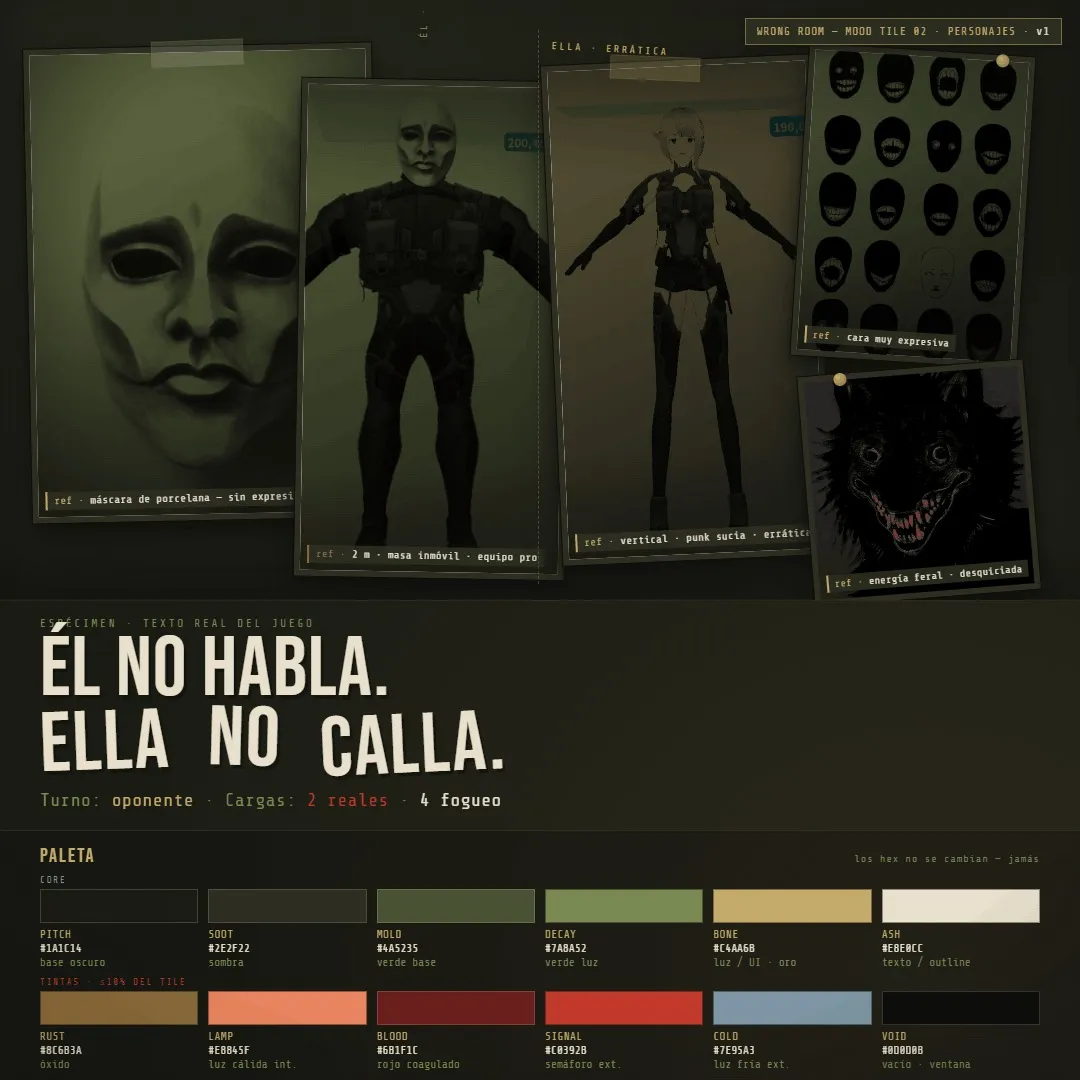
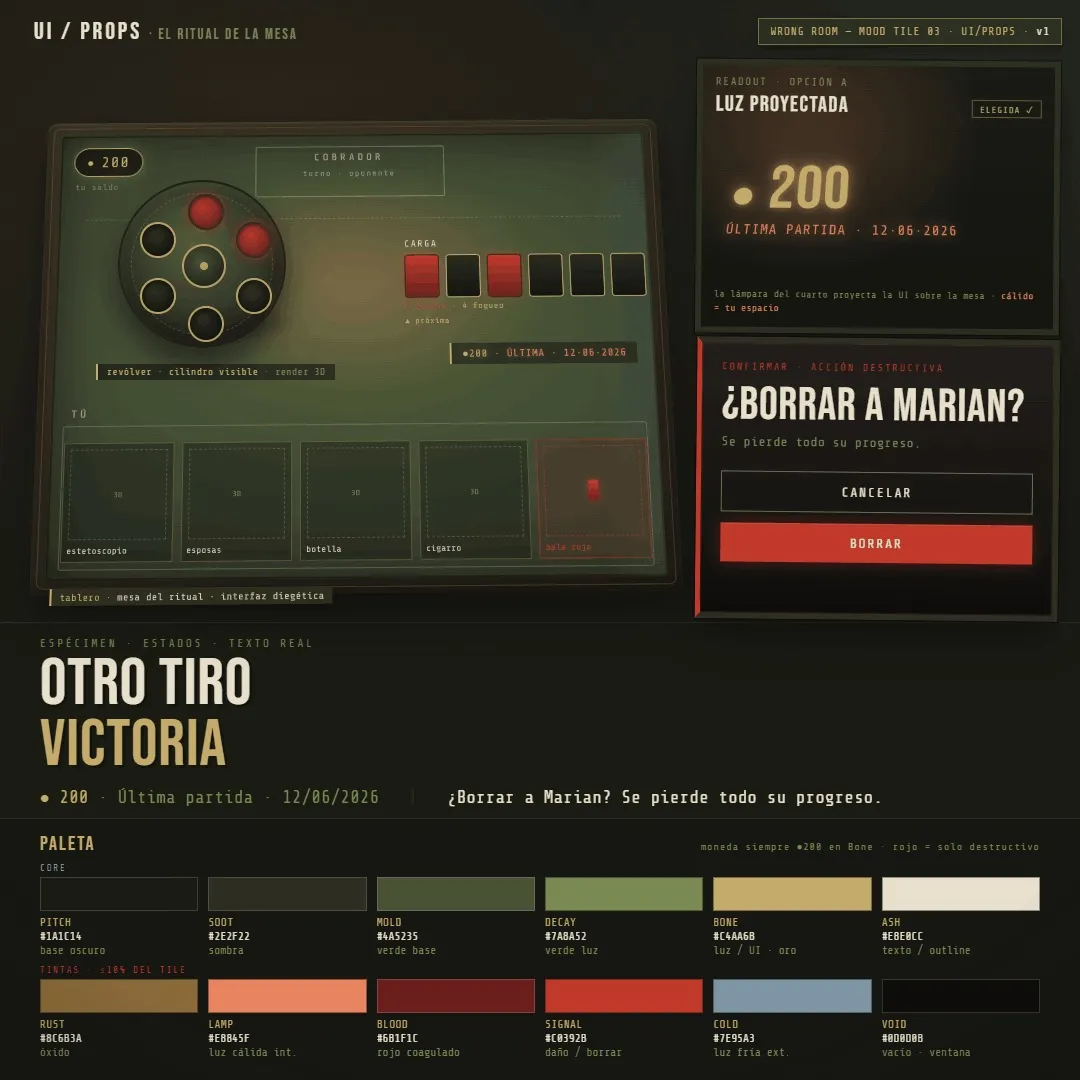
Mood tiles · environment / characters / UI · directed in Claude Design from the locked system
04 · What got cut
The screen-movie look died on contact with the real interface.
“Amber = active danger”
Replaced by the three-way colour semantic.
Aesthetic vignette
Fights comfort, eats the frame. Functional feedback only.
Film grain in post
Shimmers in-headset; the texture carries the grain instead.
Chromatic aberration
Cinematic in a still, discomfort in use.
Rule zero: no visual decision is final until it's seen in the real interface.
05 · Product keyframes → build
Key moments designed as stills first — each frame a spec the build now has to live up to.
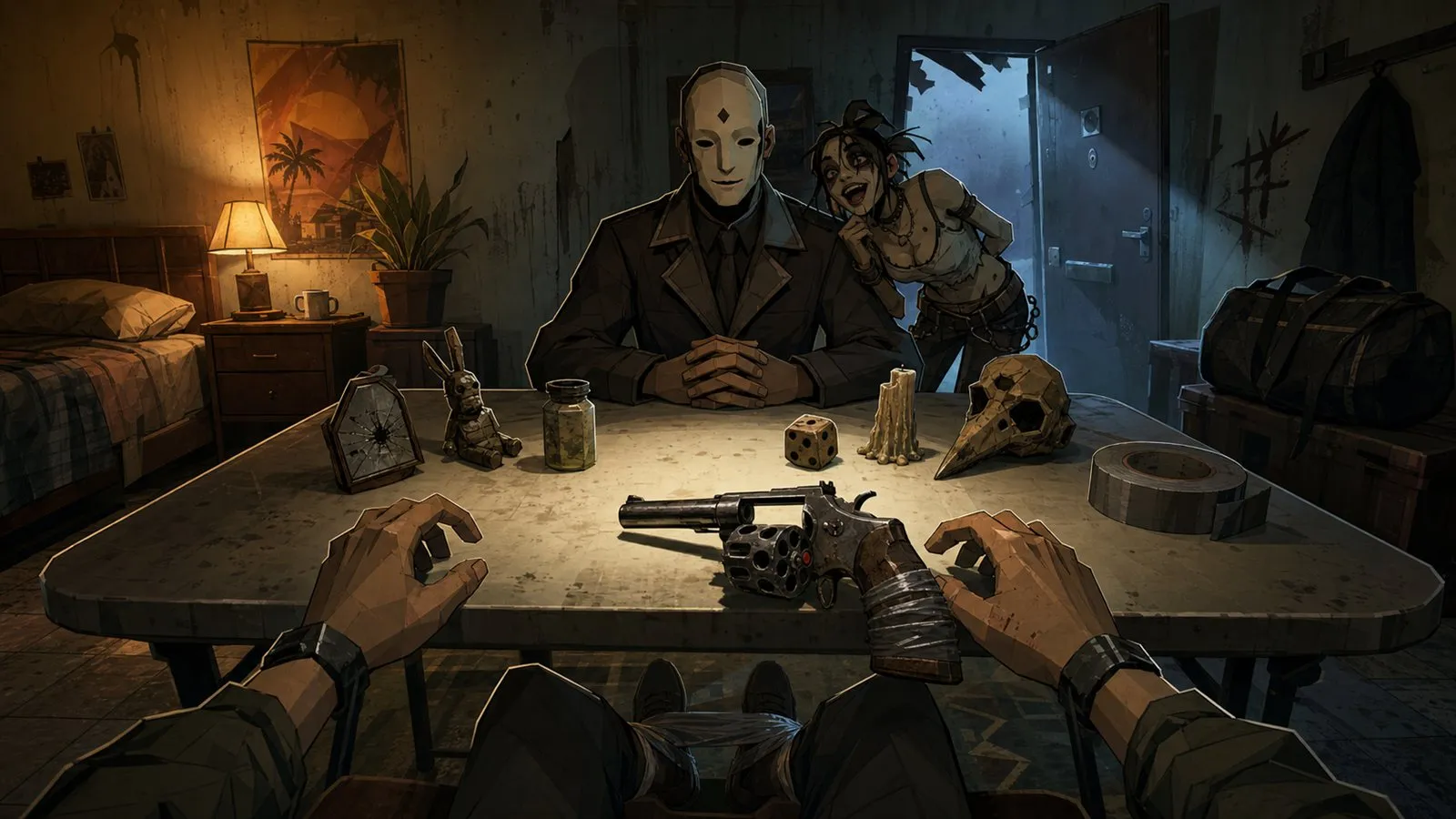
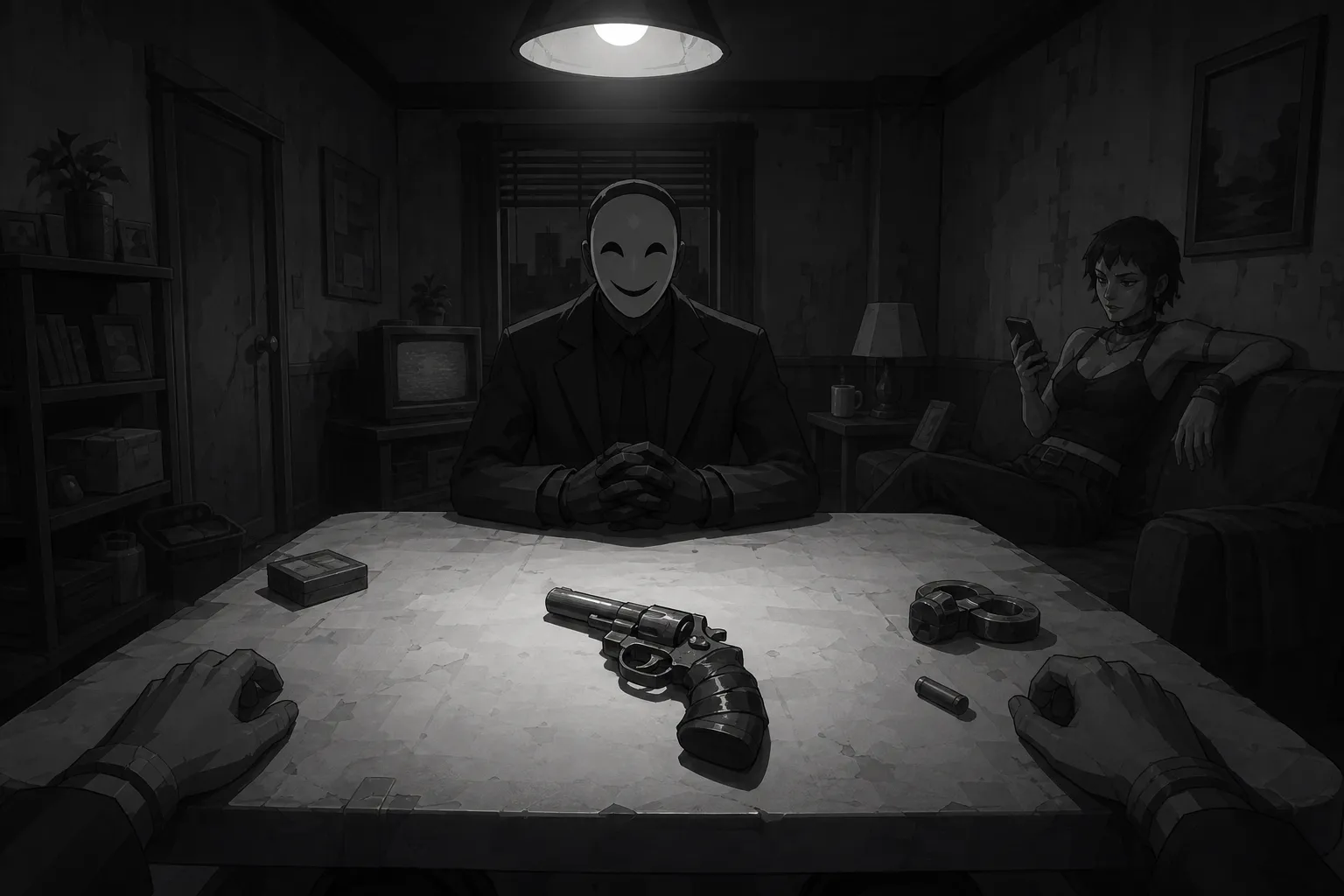
Gameplay mode
The table is the interface
Revolver as game state, items in reach. Everything reads seated — there is no HUD to fall back on.
0 overlays · game state lives in the world
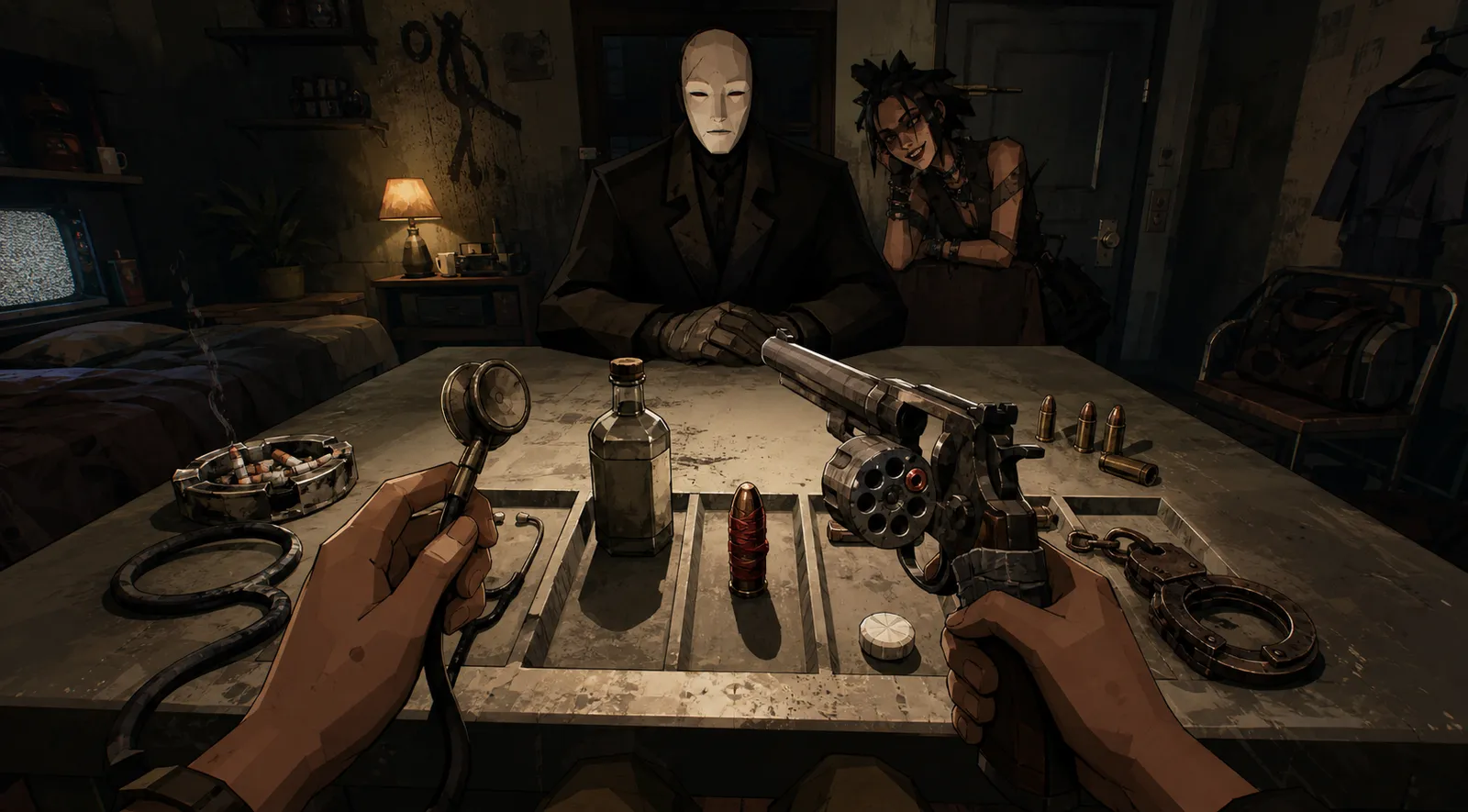
The stethoscope
The peek that powers the strategy
Hear the next chamber, then choose: pass, or point it at yourself for the extra turn.
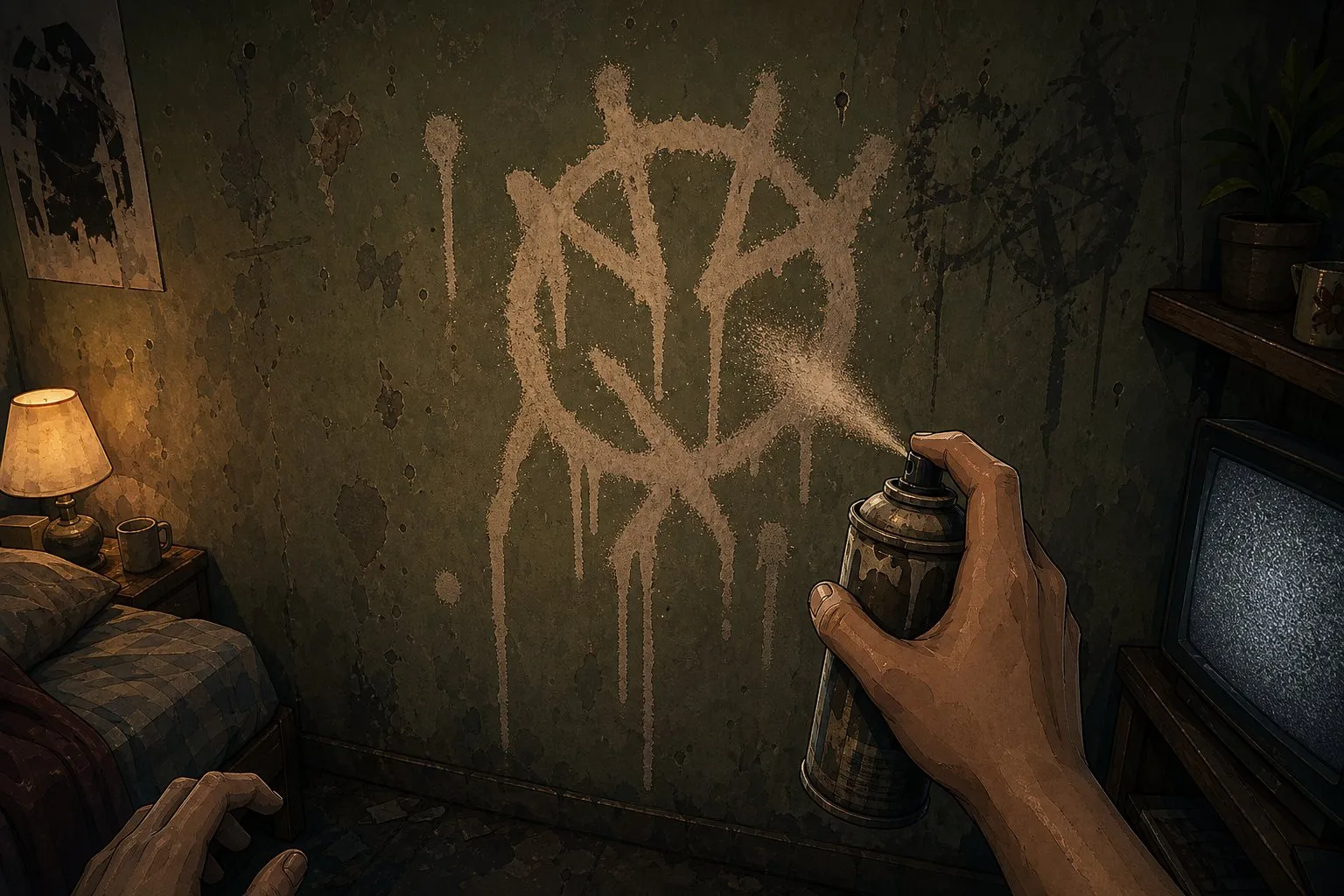
The marking
Identity that survives inside the scene
The IP's glyph sprayed in-world, not overlaid. If it can't exist inside the room, it doesn't exist.
Product keyframes directed in Claude Design from the locked visual system · the corresponding scenes are built in Unity
06 · Directing the production
One designer, one AI production team: I own the design and how it feels in VR; the AI proves its work before it lands.
May ’26
S1 · first brief
Jul 12
Design frozen · gate passed
Now
Art phase · full cast and player body in scene
Next
Horizon Store + Steam
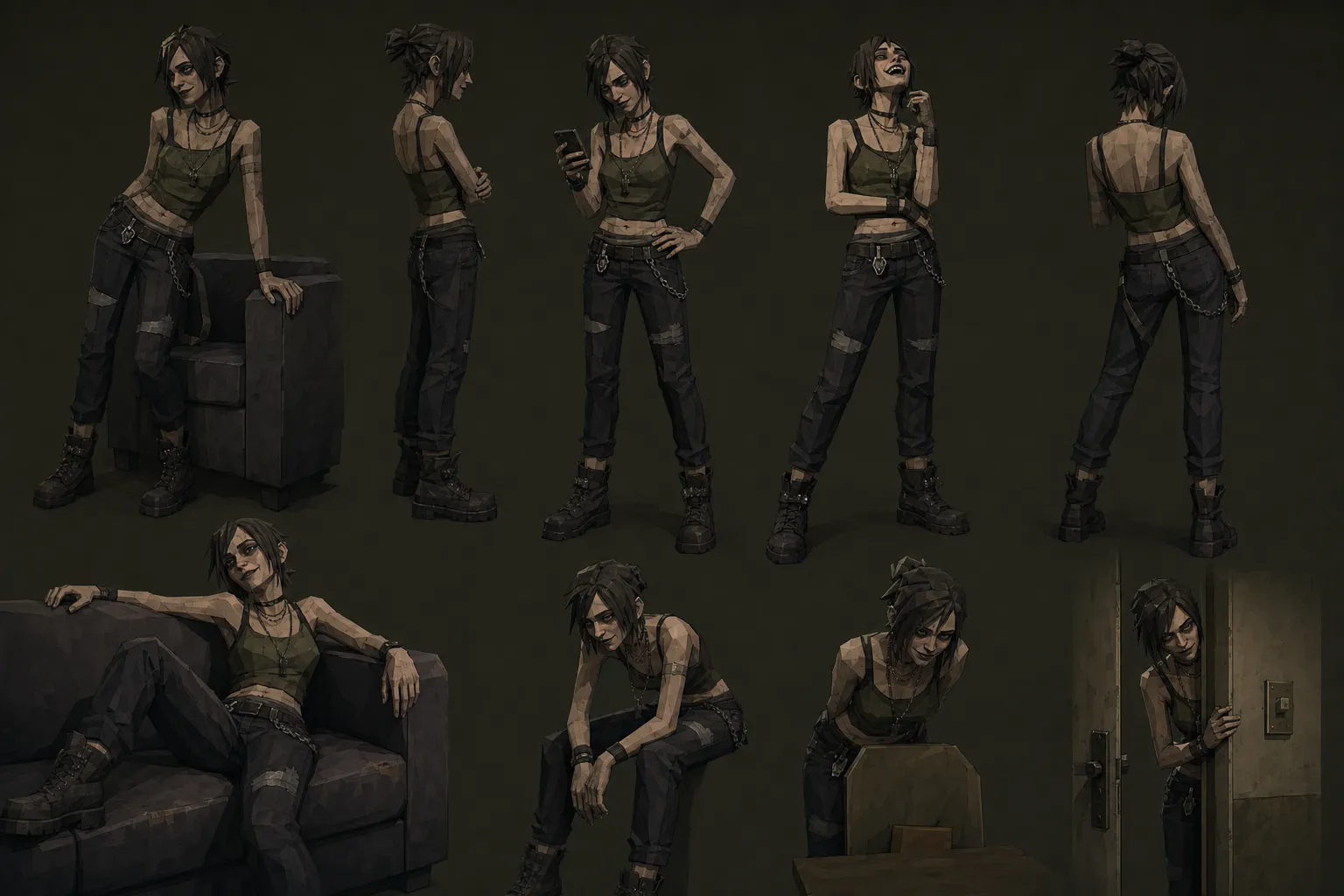
The rig that exploded
AI rigs threw meshes 80–280 m off their marks. Now the AI authors geometry only; every skeleton is rebuilt by script in Blender — hands from 30 cm off to 0.9 cm.
A minor · 3/4 · 72 bpm · bar 8 lands on the dominant — no cadence, no exit
A song that never resolves
Ella's line — “if I sing it, it never ends” — made literal: her waltz, composed in-house, never cadences. The loop has no exit.
Playtesting without a headset
Synthetic pre-triage photographs every art change in batch, so what reaches the headset is only what can't be judged flat.
07 · Problems met on the way
The project's worst enemy has a name: the failure that produces no error.
The simulator lied
When the model is wrong, retire the metric, re-argue the decision
The motion sickness that wasn’t the game
Read the platform’s log before touching yours
The fix that would have overruled my own eye
Correct the math underneath, respect what the eye approved
08 · How it's validated
“In development” doesn't mean “on faith” — and what's still open is listed, not hidden.
400 full campaigns simulated to measure progression pacing — the napkin math said 10 matches; the real number is ~23.
Three blind testers — no lore briefing, tension measured cold.
Re-measure fps after the added shadow work — the budget is a contract, not a memory.
Human voice acting — three voices, cast not chosen.
The full memory-loop campaign, end-to-end in-headset.
09 · What this proves
An original IP taken from a one-line premise to a playable build on hardware — every product and art decision mine.
brand thinking, product judgment and art direction, proven on the hardest brief: one I set myself.
112
dev sessions logged
790
automated tests, green
90
fps on Quest 3 hardware
20,000
simulated matches per balance finalist
The practice behind my AI Fluency certification (Anthropic): AI compresses exploration and execution; judgment directs it