Case · Kitzoomer
Kitzoomer
a store I designed, priced and ran for five years.
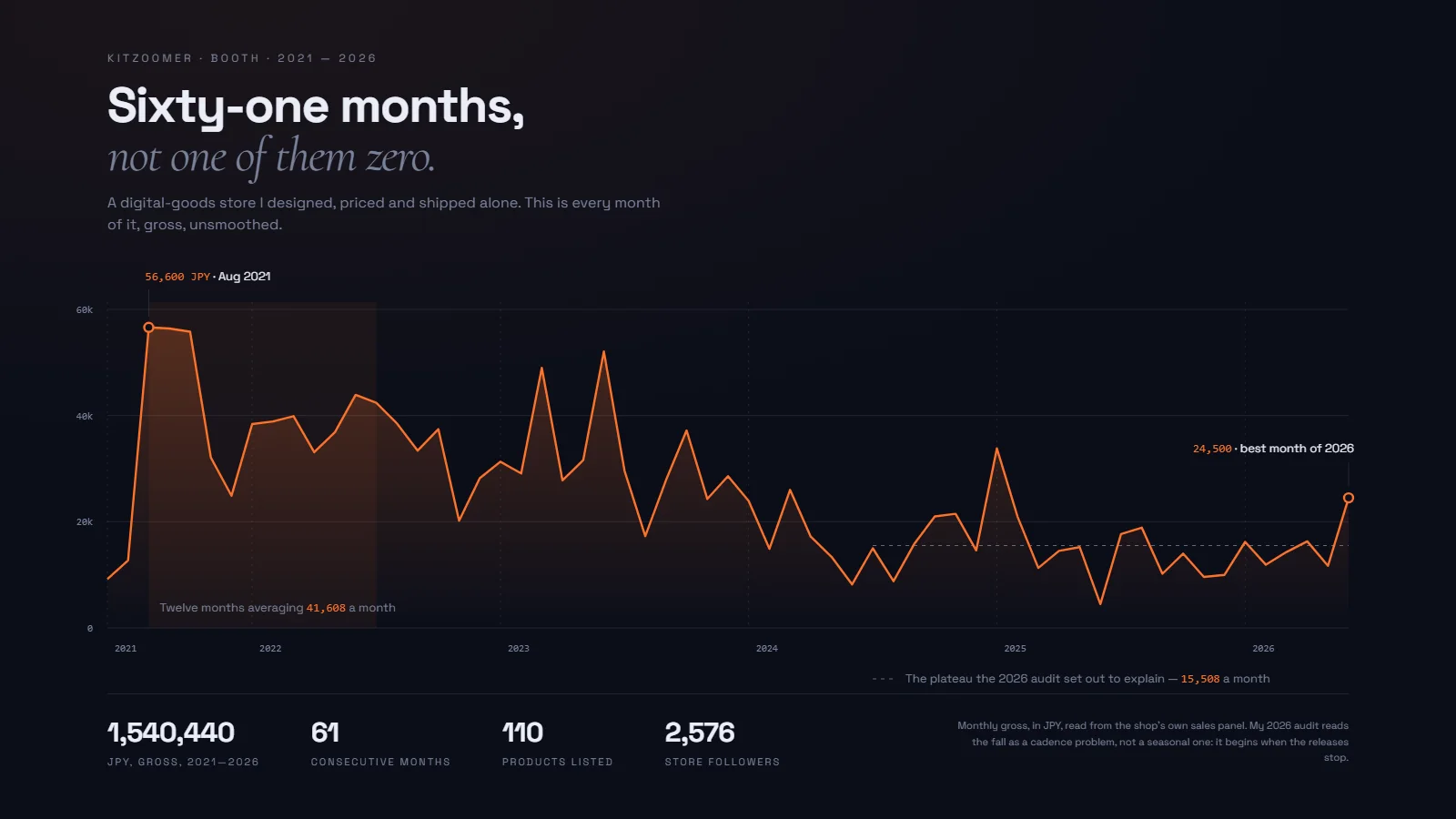
61
months trading, unbroken
¥1.54M
gross, five years
110
listings priced and shipped
441
paying members, in parallel
Most of my work carries a client's numbers. This one carries mine.
A product business I owned end to end. I set the prices, wrote the listings, made the card art, shipped the releases and read the panel every month — for five years, with nobody to sign any of it off. In 2026 I audited the whole thing line by line and changed the roadmap on what came back.
The catalogue is 3D character assets sold to VTubers, and that market has a shape worth knowing: every paid item competes with thousands of free ones, so the only things that hold a price are the ones the tool doesn't ship with. That isn't a taste call. It's the economics of the category — and it's what the audit below put a number on.
01 · Sixty-one months
02 · What the audit found
The best sellers were never the hairstyles.
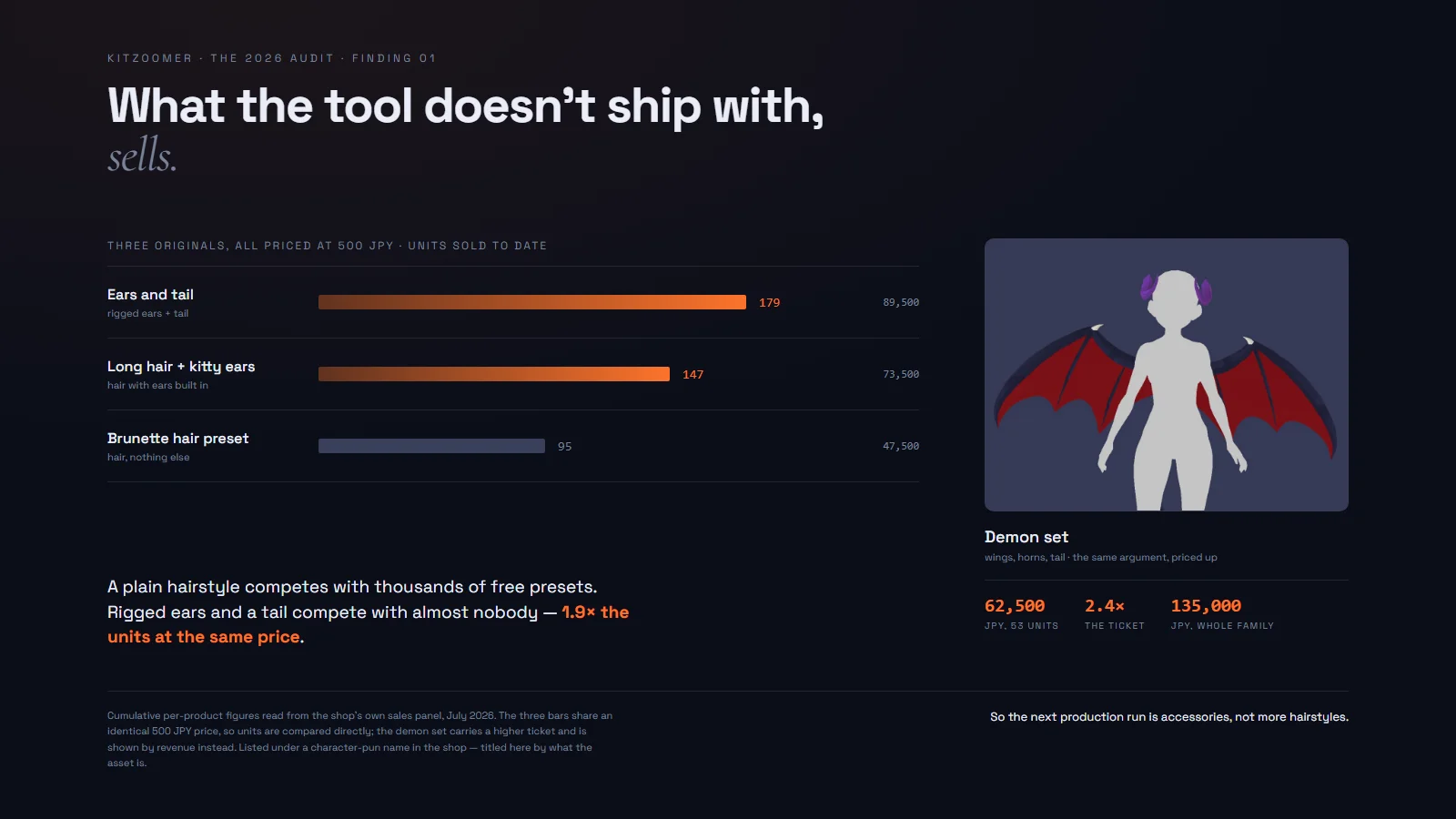
So the next production run is accessories, not more hairstyles. The lever was never the price or the catalogue size — it was making the thing the tool doesn't ship with.
And one decision I chose to stage instead of take.
Most of the revenue sat in a line I had already decided to retire. Pulling it in one move would have cost around 20,000 JPY a month — real money for a shop this size — so I set a threshold instead: the new line has to sustain 10–15k a month on its own before the old one comes down. The decision was never whether. Only what it should cost.
03 · The listing system
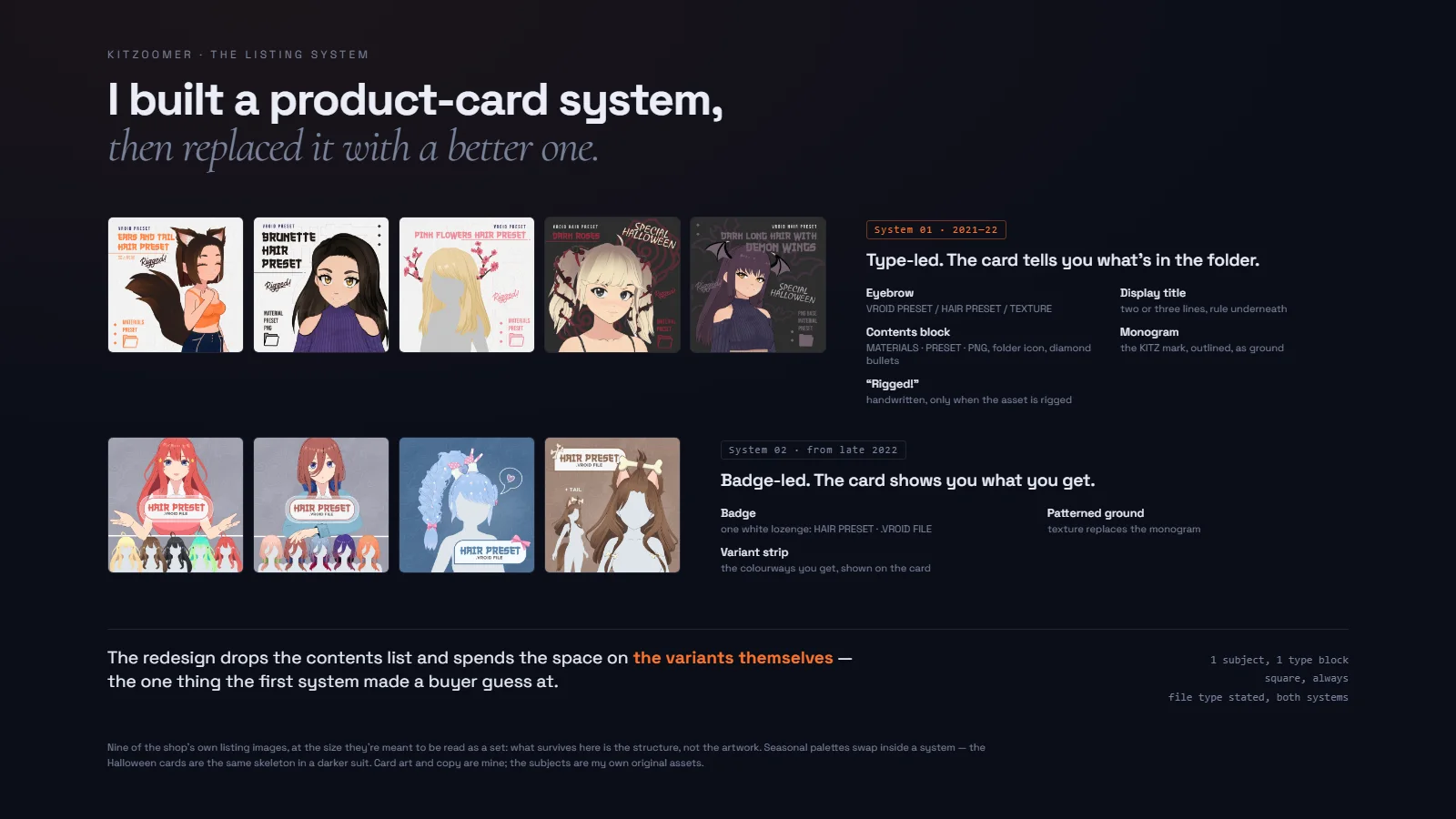
Five years of running the whole loop:
make it, price it, ship it, read the numbers, change your mind.
Free items were the entry product, not a loss — one of them holds 1,562 favourites and built a following of 2,576. Alongside the shop I ran a paid membership of 441, opened five months before the store took its first order — two ways of charging for the same craft, running at once. What this proves isn't scale: it's that every decision in the loop was mine to make, mine to measure, and mine to correct.
Shop figures read from the shop's own sales panel · JPY, gross · Membership is a public platform count, not a panel reading